
Introduction
Bullous Pemphigoid is a rare, chronic, autoimmune skin disorder that causes large, fluid-filled blisters (bullae). It primarily affects older adults and is often associated with intense itching. The condition occurs when the body’s immune system mistakenly attacks the skin’s basement membrane, leading to blister formation.
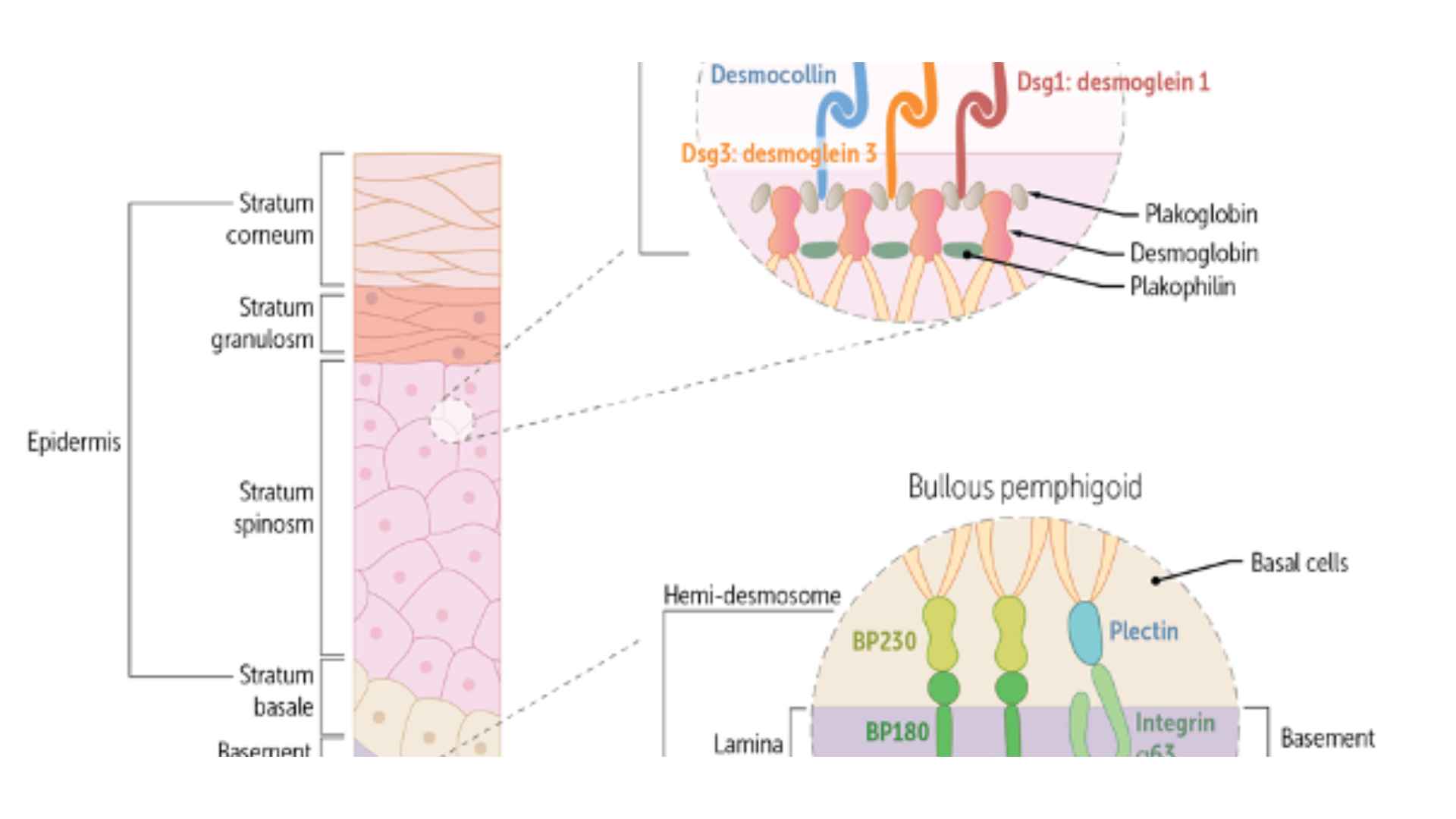
Understanding Bullous Pemphigoid :
In Bullous Pemphigoid, antibodies target proteins that anchor the outer layer of skin (epidermis) to the underlying layer (dermis). This immune reaction causes the layers to separate, resulting in tense blisters that do not rupture easily. Unlike other blistering disorders, the blisters in Bullous Pemphigoid are usually filled with clear fluid and appear on areas such as the abdomen, arms, legs, and sometimes in the mouth.
Types
Generalized Bullous Pemphigoid – widespread blisters over large parts of the body.
Localized Bullous Pemphigoid – blisters limited to specific areas (often around joints).
Non-bullous variant – presents mainly with itchy, red, hive-like rashes before blisters appear.
Causes & Symptoms:
Causes:
- Autoimmune reaction: antibodies attacking skin proteins (BP180 and BP230).
- Genetic predisposition.
- Certain medications (e.g., antibiotics, diuretics, and painkillers).
- Age-related immune changes (most common in the elderly).
Symptoms:
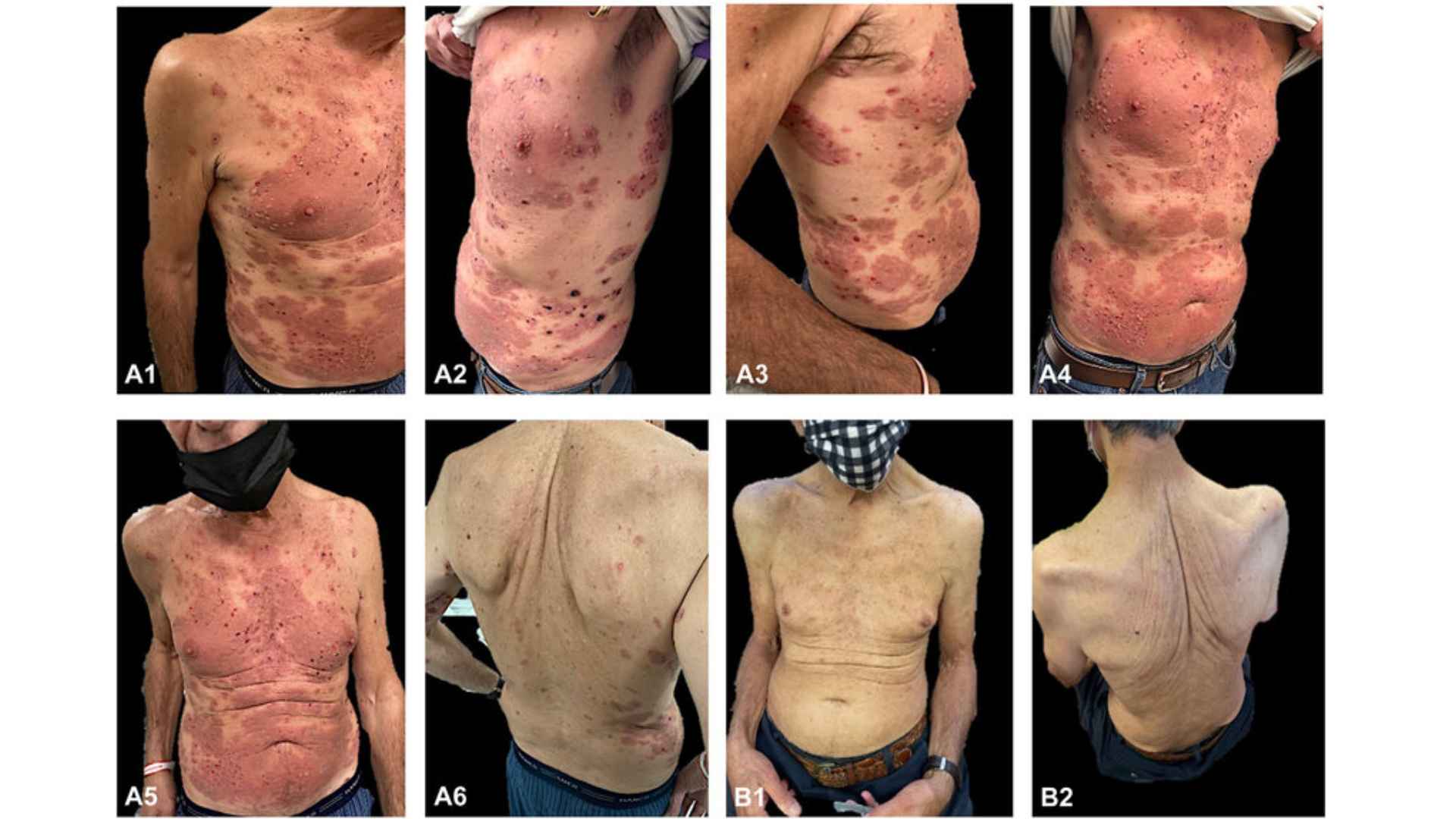
- Large, tense blisters filled with clear fluid.
- Severe itching before blister formation.
- Red, inflamed skin around blisters.
- Occasional involvement of mucous membranes (mouth, eyes).
- Rash- or hives-like appearance before blisters appear.
Complications:
- Secondary infections of blisters.
- Scarring and pigmentation changes.
- Difficulty in mobility (if blisters occur on joints).
- In rare cases, widespread skin involvement leads to fluid and protein loss.
- Side effects from long-term conventional treatment (like steroids).
Diagnosis :
Diagnosis involves:
- Clinical examination of blisters and skin.
- Skin biopsy – to confirm presence of antibodies and inflammation.
- Direct Immunofluorescence (DIF) test – detects antibodies in skin tissue.
- Blood tests – to identify circulating antibodies.
Benefits of Homoeopathic Treatment
1. Individualised Care: Homoeopathy recognizes that each person is unique. A homoeopath will assess your symptoms, medical history, and lifestyle to prescribe a personalised treatment plan tailored to your needs.
2. Gentle and Natural: Homoeopathic remedies are derived from natural substances and are known for their minimal side effects. They work in harmony with the body, promoting self-healing and overall well-being.
3. Holistic Approach: Homoeopathy takes into account not only the physical symptoms but also the emotional and mental aspects of an individual. It aims to restore balance at all levels, providing comprehensive care.
4. Long-Term Relief: By addressing the underlying causes of Hyperacidity, homoeopathy strives to achieve long-term relief and improved quality of life.
Homeopathy and Bullous Pemphigoid :
Homeopathy aims to manage Bullous Pemphigoid by improving immunity, reducing itching, healing blisters, and preventing recurrences without harmful side effects. Remedies are selected based on the patient’s constitution and symptoms.
- Apis mellifica – for burning, stinging blisters.
- Rhus toxicodendron – for itching and blistering with redness.
- Arsenicum album – for burning pains, restlessness, and anxiety.
- Mezereum – for thick crusts and oozing after blisters.
- Sulphur – for chronic itching and eruptions that worsen with heat.
Consulting a Homeopath:
Consulting a professional Sanjivani homoeopath is essential for an accurate diagnosis and personalised treatment plan. Sanjivani Homoeopaths take a holistic approach, considering the patient's overall health, lifestyle, and specific asthma triggers. They select remedies based on individual symptoms.
Sanjivani Homeopathy Clinic USP
- No homoeopathy Dietary Restrictions:
Allows patients to enjoy foods like onion, garlic, and coffee, ensuring a stress-free treatment journey.
- 24/7 Online Consultations:
Enables convenient access to doctors with detailed counseling, history management, and follow-ups.
- Highly Skilled Team:
Experienced BHMS and MD doctors, supported by multilingual and professional staff.
- Patient-Centric Care:
Simplifies treatment with modern, adaptable solutions and clear communication.
Click Here for Detailed "Sanjivani USP"
FAQ's
- What is homoeopathy ?
Homoeopathy is a holistic science which belives in the law of Similia Similibus Curenter i.e Like Cures Like .It was discovered by Dr Samuel Christian Hahnemannn in 1796.
- Is there any side effects of homoeopathy?
As homoeopathic medicines are made from natural substances this medicines have no side effects and are completely safe to consume
- Is there any diet restriction to take homoeopathic medicines?
There are no diet restrictions for homoeopathic medicines. One should only avoid eating or drinking any liquid other than water at least 30 minutes before and after taking homoeopathic medicines.
Click Here for "Frequently Asked Questions."
Conclusion
Bullous Pemphigoid is a rare but serious autoimmune blistering skin disease, most common in the elderly. Early diagnosis and treatment are crucial to prevent complications. While conventional medicine focuses on suppressing symptoms with steroids and immunosuppressants, homeopathy offers a holistic and safer alternative by addressing the root cause, improving immunity, and enhancing overall well-being.
Disclaimer: The information provided in this blog is for educational purposes only and should not be considered medical advice. Please consult with a qualified healthcare professional before starting any treatment for Bullous Pemphigoid or any other medical condition.

