
Introduction
Aphthous ulcers, commonly known as canker sores, are small, painful lesions that develop inside the mouth, typically on the inner surface of the cheeks, lips, tongue, soft palate, or the base of the gums. These ulcers are non-contagious and often recur in susceptible individuals. Although usually harmless and self-limiting, they can significantly impact quality of life due to pain and discomfort while eating, drinking, or speaking.
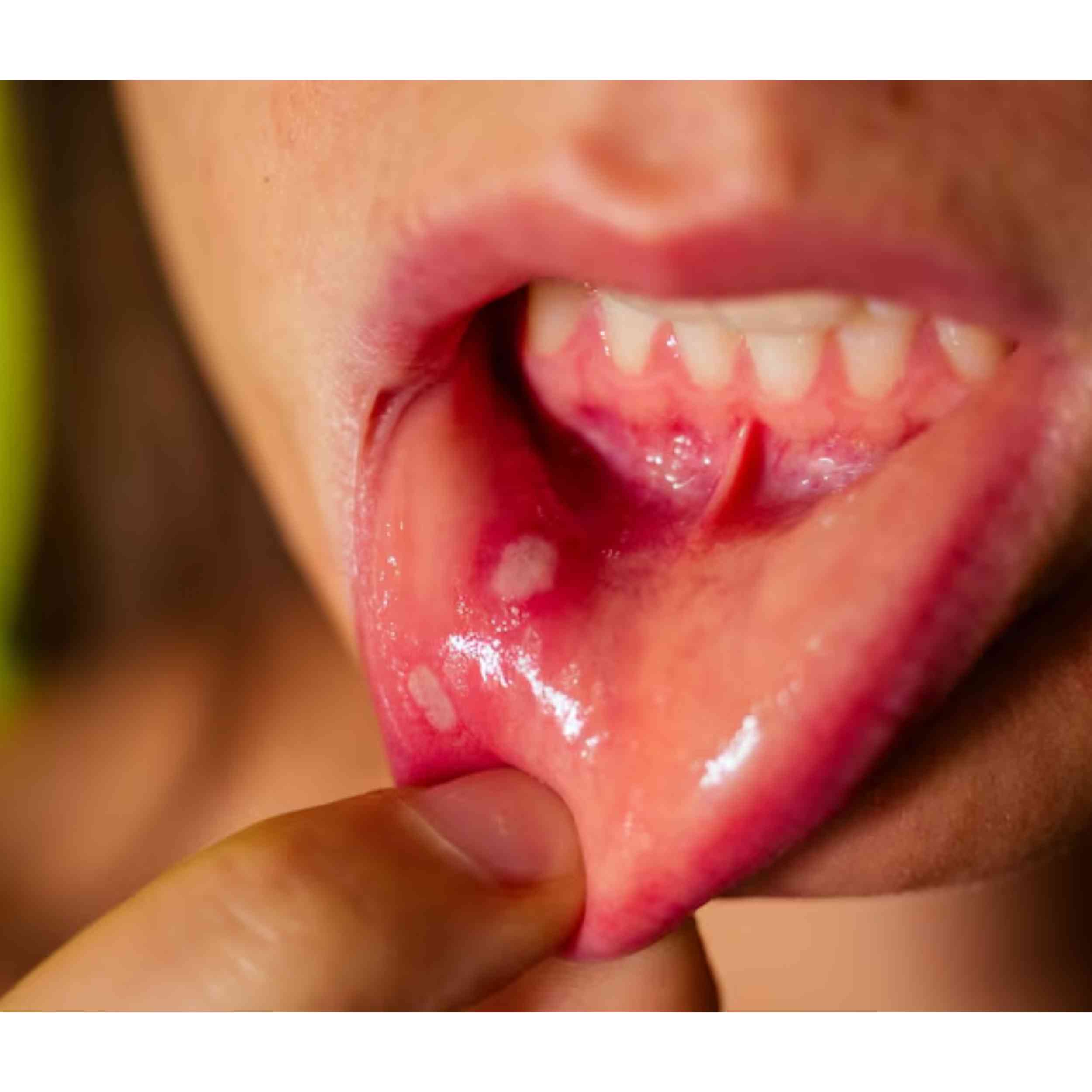
Understanding Aphthous ulcers:
Aphthous ulcers are shallow, round or oval sores with a yellowish or white center and a red border. They are categorized into three main types:
Minor aphthous ulcers: Small (less than 1 cm), heal without scarring in 7–14 days.
Major aphthous ulcers: Larger, deeper, can take weeks to heal and may leave scars.
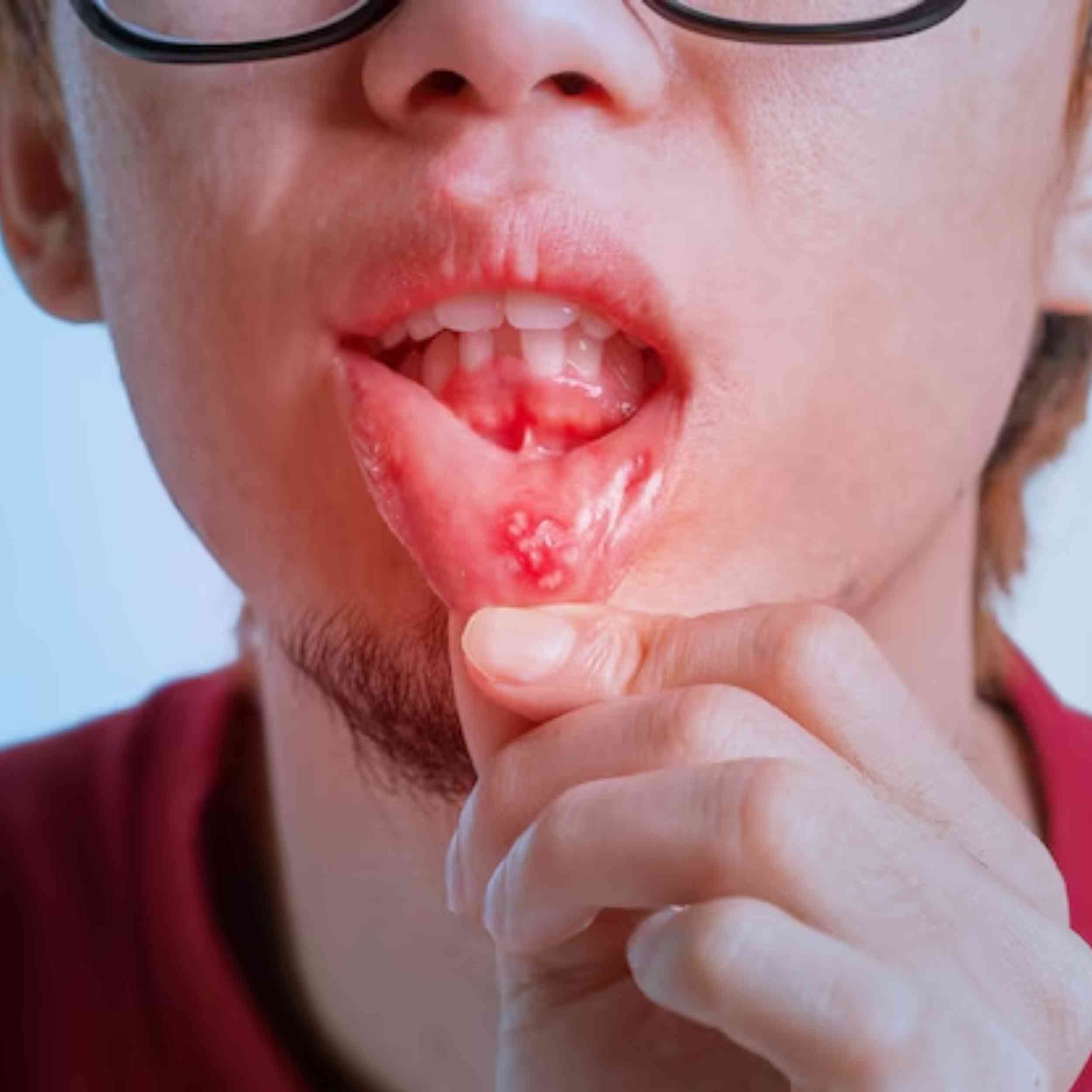
Herpetiform ulcers: Multiple small pinpoint ulcers that may merge into larger ones.
They are not caused by the herpes virus, despite the name of the third type.
Causes & Symptoms:
Causes:
The exact cause is often unknown, but multiple factors may trigger or contribute to their occurrence:
- Stress and emotional trauma
- Nutritional deficiencies (iron, vitamin B12, folic acid, zinc)
- Hormonal changes (e.g., menstruation)
- Food allergies or sensitivities (e.g., spicy, acidic, or citrus foods)
- Mouth injuries (biting cheek, dental work, rough brushing)
- Underlying health conditions (celiac disease, Crohn’s disease, Behçet’s disease)
- Certain medications (NSAIDs, beta-blockers, chemotherapeutics)
Symptoms:
- Painful sore(s) inside the mouth
- Burning or tingling sensation before appearance
- Difficulty in eating or speaking
- Red halo surrounding the ulcer
- Swelling in nearby lymph nodes (in severe cases)
Risk Factors:
- Family history of aphthous ulcers
- Adolescents and young adults are more commonly affected
- Females are slightly more prone due to hormonal factors
- Weakened immune system
- Poor oral hygiene
- Use of toothpaste containing sodium lauryl sulfate (SLS)
Complications:
Though not usually serious, complications can arise, especially if ulcers are frequent, large, or do not heal:
- Secondary bacterial infections
- Scarring (in major aphthous ulcers)
- Nutritional problems due to difficulty eating
- Psychological distress due to chronic pain
- May indicate an underlying systemic disorder if recurrent and severe

Diagnosis :
Diagnosis is usually clinical, based on physical examination and medical history. No specific test is needed unless ulcers are persistent, recurrent, or unusually severe. In such cases, additional investigations may be required:
- Blood tests to check for nutritional deficiencies or immune problems
- Biopsy to rule out malignancy or other conditions
- Screening for gastrointestinal or autoimmune disorders
Benefits of Homoeopathic Treatment
1. Individualised Care: Homoeopathy recognizes that each person is unique. A homoeopath will assess your symptoms, medical history, and lifestyle to prescribe a personalised treatment plan tailored to your needs.
2. Gentle and Natural: Homoeopathic remedies are derived from natural substances and are known for their minimal side effects. They work in harmony with the body, promoting self-healing and overall well-being.
3. Holistic Approach: Homoeopathy takes into account not only the physical symptoms but also the emotional and mental aspects of an individual. It aims to restore balance at all levels, providing comprehensive care.
4. Long-Term Relief: By addressing the underlying causes of Hyperacidity, homoeopathy strives to achieve long-term relief and improved quality of life.
Homeopathy for Aphthous Ulcers:
Homeopathy aims to treat the individual as a whole, addressing the root cause along with the symptoms. It offers gentle, long-lasting relief from aphthous ulcers and helps prevent recurrence. Common homeopathic remedies include:
- Borax: Painful ulcers inside cheeks or tongue; sensitive to touch and warm food.
- Mercurius solubilis: Profuse salivation, offensive breath, swollen glands.
- Nitric acid: Deep, painful ulcers with sharp, splinter-like pain.
- Kali bichromicum: Deep ulcers with punched-out appearance and thick, yellow coating.
- Sulphur: Recurrent ulcers with burning sensation, worse from warmth.
- Natrum muriaticum: Ulcers after stress or emotional grief, often on the tongue.
- Arsenicum album: Painful burning ulcers with restlessness and anxiety.
Consulting a Homeopath:
If you are seeking homoeopathic treatment for Aphthous ulcers, it is essential to consult with a qualified and experienced homoeopath. At Sanjivani Homeopathy Clinic, our team of skilled homoeopaths will conduct a thorough evaluation, considering your symptoms, medical history, and individual characteristics to develop a personalised treatment plan.
Sanjivani Homeopathy Clinic USP
- No homoeopathy Dietary Restrictions:
Allows patients to enjoy foods like onion, garlic, and coffee, ensuring a stress-free treatment journey.
- 24/7 Online Consultations:
Enables convenient access to doctors with detailed counseling, history management, and follow-ups.
- Highly Skilled Team:
Experienced BHMS and MD doctors, supported by multilingual and professional staff.
- Patient-Centric Care:
Simplifies treatment with modern, adaptable solutions and clear communication.
Click Here for Detailed "Sanjivani USP"
FAQ's
- What is homoeopathy ?
Homoeopathy is a holistic science which belives in the law of Similia Similibus Curenter i.e Like Cures Like .It was discovered by Dr Samuel Christian Hahnemannn in 1796.
- Is there any side effects of homoeopathy?
As homoeopathic medicines are made from natural substances this medicines have no side effects and are completely safe to consume
- Is there any diet restriction to take homoeopathic medicines?
There are no diet restrictions for homoeopathic medicines. One should only avoid eating or drinking any liquid other than water at least 30 minutes before and after taking homoeopathic medicines.
Click Here for "Frequently Asked Questions."
Conclusion
Homeopathic remedies offer a holistic and gentle approach to managing aphthous ulcers by addressing both the immediate discomfort and the underlying causes such as stress, nutritional deficiencies, or immune imbalance. Instead of merely suppressing symptoms, homeopathy focuses on the individual's overall constitution, emotional state, and lifestyle to stimulate natural healing. Sanjivani Homeopathy provides a personalized and sustainable solution for recurrent mouth ulcers, offering lasting relief without harsh medications—helping patients regain comfort, confidence, and improved quality of life.
Disclaimer : The information provided in this blog is for educational purposes only and should not be considered medical advice. Please consult with a qualified healthcare professional before starting any treatment for aphthous ulcers or any other medical condition.

