
Introduction
Alzheimer’s disease is a progressive neurological disorder that slowly destroys memory, thinking skills, and the ability to carry out even the simplest tasks. It is the most common cause of dementia in older adults and has a significant impact not only on the person affected but also on their family and caregivers. As the disease progresses, individuals often require full-time care and support.
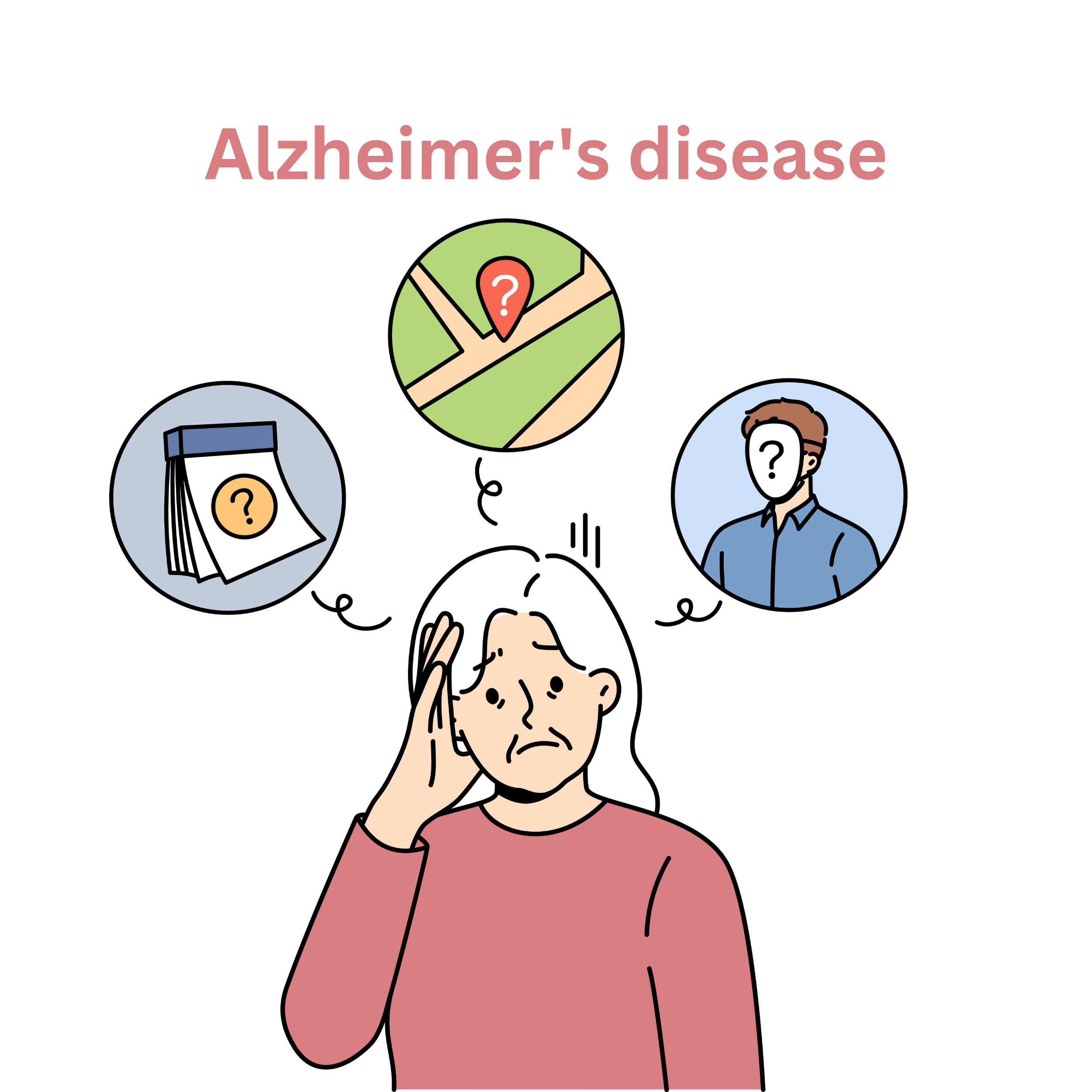
Understanding Alzheimer’s disease:
Alzheimer’s disease involves the degeneration and death of brain cells, leading to a steady decline in cognitive abilities and memory. It usually begins with mild memory lapses and confusion but gradually worsens, affecting reasoning, behavior, language, and the ability to perform daily activities. Changes in the brain due to abnormal protein deposits (amyloid plaques and tau tangles) are the hallmark features of this condition.
Causes & Symptoms:
Causes:
- Amyloid plaques and neurofibrillary tangles: Abnormal clumps and twisted fibers in the brain that disrupt cell function.
- Loss of connections between neurons in the brain.
- Genetic mutations, especially in early-onset Alzheimer's.
- Inflammation and oxidative stress in the brain.
Symptoms:
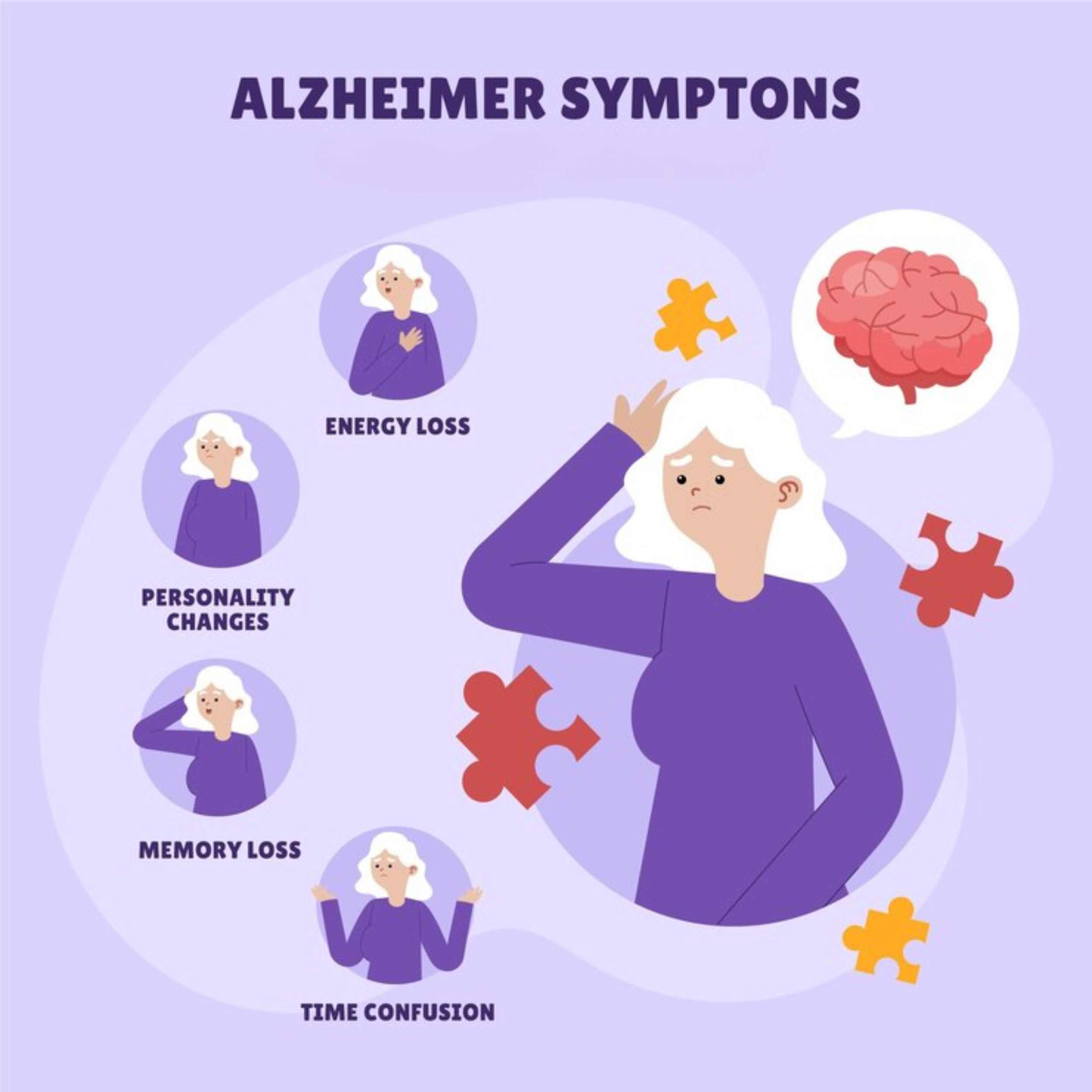
- Memory loss affecting daily life
- Difficulty solving problems or planning
- Confusion with time or place
- Trouble understanding visuals or spatial relationships
- Problems with speaking or writing
- Misplacing things and inability to retrace steps
- Poor judgment and decision-making
- Withdrawal from work or social activities
- Changes in mood, personality, and behavior
Risk Factors:
- Age: Risk increases significantly after age 65
- Family history and genetics
- Down syndrome
- Poor heart health: High blood pressure, diabetes, high cholesterol
- Head trauma
- Sedentary lifestyle
- Smoking and excessive alcohol consumption
- Chronic stress and depression
Complications:
- Inability to perform self-care (eating, dressing, bathing)
- Increased risk of infections like pneumonia
- Malnutrition and dehydration
- Falls and injuries
- Social isolation and caregiver burden
- Wandering and getting lost
- Communication difficulties
- Complete dependence in the final stages

Diagnosis :
- Medical history and physical examination
- Cognitive and neuropsychological tests to assess memory, attention, and problem-solving
- Brain imaging (CT, MRI, PET) to detect brain shrinkage and rule out other conditions
- Blood tests to exclude other possible causes of dementia symptoms
- Genetic testing in cases of suspected familial Alzheimer’s
Benefits of Homoeopathic Treatment
1. Individualised Care: Homoeopathy recognizes that each person is unique. A homoeopath will assess your symptoms, medical history, and lifestyle to prescribe a personalised treatment plan tailored to your needs.
2. Gentle and Natural: Homoeopathic remedies are derived from natural substances and are known for their minimal side effects. They work in harmony with the body, promoting self-healing and overall well-being.
3. Holistic Approach: Homoeopathy takes into account not only the physical symptoms but also the emotional and mental aspects of an individual. It aims to restore balance at all levels, providing comprehensive care.
4. Long-Term Relief: By addressing the underlying causes of Hyperacidity, homoeopathy strives to achieve long-term relief and improved quality of life.
Homeopathy for Alzheimer’s Disease:
Homeopathy offers a gentle and supportive approach in managing Alzheimer’s disease, especially in its early to moderate stages. It helps slow progression, manage behavioral symptoms, and improve overall quality of life. By treating the individual holistically, considering their emotional, mental, and physical symptoms, homeopathy aims to enhance brain function and balance the nervous system.
Common Homeopathic Remedies:
- Anacardium Orientale: For memory weakness, confusion, and suspicion
- Baryta Carb: For memory loss and mental dullness in elderly people
- Cannabis Indica: For forgetfulness and inability to connect thoughts
- Alumina: For slow, confused thinking and disorientation
- Kali Phosphoricum: For mental fatigue, stress, and nervous exhaustion
- Lycopodium: For early-stage memory loss and low confidence
Consulting a Homeopath
If you are seeking homoeopathic treatment for Alzheimer’s disease, it is essential to consult with a qualified and experienced homoeopath. At Sanjivani Homeopathy Clinic, our team of skilled homoeopaths will conduct a thorough evaluation, considering your symptoms, medical history, and individual characteristics to develop a personalised treatment plan.
Sanjivani Homeopathy Clinic USP
- No homoeopathy Dietary Restrictions:
Allows patients to enjoy foods like onion, garlic, and coffee, ensuring a stress-free treatment journey.
- 24/7 Online Consultations:
Enables convenient access to doctors with detailed counseling, history management, and follow-ups.
- Highly Skilled Team:
Experienced BHMS and MD doctors, supported by multilingual and professional staff.
- Patient-Centric Care:
Simplifies treatment with modern, adaptable solutions and clear communication.
Click Here for Detailed "Sanjivani USP"
FAQ's
- What is homoeopathy ?
Homoeopathy is a holistic science which belives in the law of Similia Similibus Curenter i.e Like Cures Like .It was discovered by Dr Samuel Christian Hahnemannn in 1796.
- Is there any side effects of homoeopathy?
As homoeopathic medicines are made from natural substances this medicines have no side effects and are completely safe to consume
- Is there any diet restriction to take homoeopathic medicines?
There are no diet restrictions for homoeopathic medicines. One should only avoid eating or drinking any liquid other than water at least 30 minutes before and after taking homoeopathic medicines.
Click Here for "Frequently Asked Questions."
Conclusion
Homoeopathic remedies offer a holistic and compassionate approach to managing Alzheimer’s disease by focusing not only on the symptoms but also on the underlying emotional and mental imbalances. By understanding the patient's unique personality, cognitive patterns, and lifestyle, homoeopathy aims to gently support brain function, slow disease progression, and improve quality of life. Unlike conventional treatments that often emphasize only symptom control, homoeopathy works to enhance the body’s natural healing ability and emotional resilience.
At Sanjivani Homoeopathy, our individualized treatment plans are designed to nurture cognitive health, ease behavioral changes, and bring comfort to both patients and caregivers. This gentle system of medicine can be a valuable complementary option in Alzheimer’s care, promoting emotional balance, mental clarity, and overall well-being—offering hope, dignity, and a better quality of life through each stage of the journey.
Disclaimer : The information provided in this blog is for educational purposes only and should not be considered medical advice. Please consult with a qualified healthcare professional before starting any treatment for Alzheimer’s disease or any other medical condition.

